

Problems this cleaning service solves
- Fine renovation dust settling after ordinary vacuuming
- New fixtures and finishes needing careful product selection
- Cabinet, ledge, trim, and floor residue
- A project that is complete but the space is not ready to use
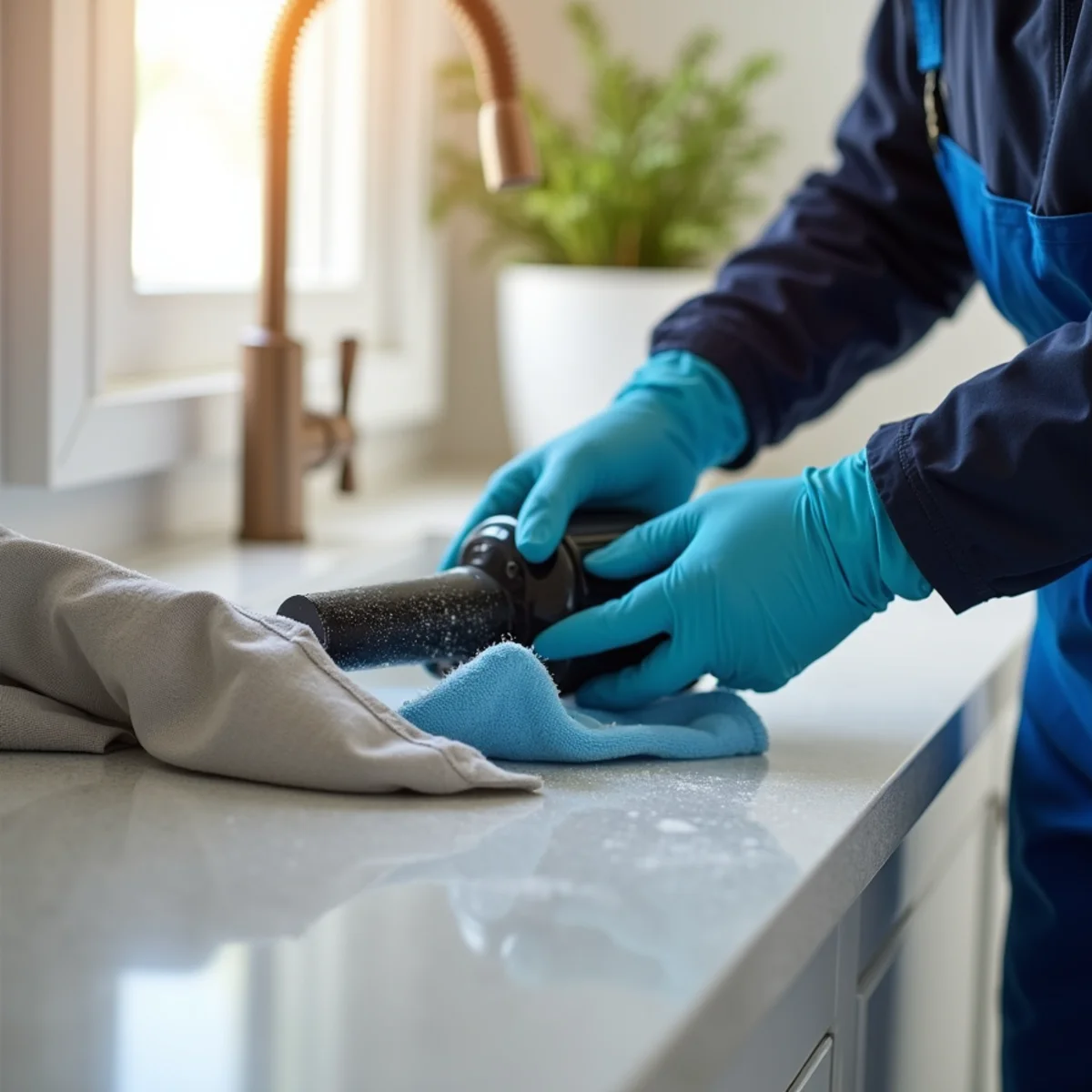
Renovation dust behaves differently
Post-construction dust is lighter and more persistent than ordinary household dirt. It travels through door gaps, settles on vertical surfaces, and can reappear after a first pass. A proper cleanup is staged: accessible upper surfaces, trim, fixtures, ledges, cabinets, and floors are addressed in an order that limits recontamination.
This service should begin after contractors finish cutting, sanding, drilling, and painting. If active work continues, new dust can undo the cleaning within minutes.
Protect the finishes you just paid for
New stone, tile, wood, metal, glass, and painted surfaces do not all tolerate the same products or pressure. Provide care instructions and identify anything newly sealed, cured, or installed. The safest professional choice is to follow manufacturer guidance rather than assume one cleaner belongs on every finish.
Remove contractor tools, sharp debris, adhesives, and hazardous materials before the cleaning appointment. Cleaning staff should not be asked to manage an unsafe construction site or unknown chemicals.
What a ready-for-use clean focuses on
The work targets fine dust on reachable surfaces, baseboards, doors, switches, ledges, fixtures, cabinets where selected, and accessible flooring. Kitchens and bathrooms receive detailed care appropriate to the booked scope. The goal is to move the space from project-complete to comfortable and usable.
Some dust resettlement is normal after renovation. Air movement and hidden cavities can release particles even after careful cleaning. Discuss the size of the project and whether more than one pass may be appropriate.
Plan access with your contractor and building
In co-ops and condos, renovation hours, service elevators, and contractor access may differ from ordinary visitor rules. Confirm who will provide entry and whether the superintendent needs notice. Keep electricity, water, and ventilation available.
Photograph specialty finishes and note existing damage before work begins. Clear communication protects both the property and the cleaning team, especially when multiple vendors have recently worked in the same space.
Define the final-clean handoff for the project
A renovated apartment and a commercial build-out can both hold fine dust, but their handoff requirements differ. A home may need reachable cabinets, fixtures, floors, and living surfaces prepared before move-in. An office or retail space may have larger floor areas, multiple trades, inspection dates, or opening deadlines. Share the renovated rooms, square footage, material list, contractor completion date, and the person authorized to approve the cleaning scope.
Post-construction cleaning should not be treated as hazardous-material remediation or specialized mechanical cleaning. Suspected lead, asbestos, mold, chemical spills, contaminated debris, or dust inside HVAC systems requires disclosure and may require an appropriately qualified specialist. Ordinary cleaning also cannot compensate for uncured paint, grout, sealant, or flooring adhesive. Confirm that trades are finished, surfaces are ready for care, and major debris has been removed before the final cleaning window begins.
Our cleaning process
Confirm contractor completion
Construction work and major debris removal should be finished before cleaning begins.
Identify new finishes
Share manufacturer care instructions for stone, wood, fixtures, paint, and specialty surfaces.
Remove dust in stages
The team works from upper accessible surfaces down, with repeated detail and floor passes as needed.
Allow for resettlement
Fine airborne dust can settle again; the site guidance and scope should account for this behavior.
What affects the estimate
OSO Spotless does not publish an invented one-price-fits-all figure. A personalized quote reflects the real work, including:
- Renovated area and dust volume
- Type of construction or painting work
- New finish and fixture requirements
- Cabinet and appliance interiors
- Debris remaining and safe site access
Related New York cleaning services
Helpful cleaning guides
Post-Construction Cleaning service areas
Explore local cleaning guidance for homes and apartments in these New York service areas: